Use Unconditionally Font for Handcrafted Products That Feel Personal
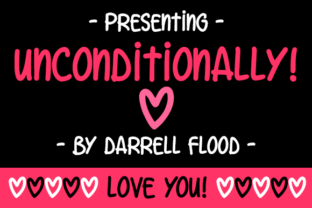
When you run a handmade shop or create printables for other makers, every detail matters. The font you choose on a label, a card, or a digital template says as much about your brand as the product itself. I have tested dozens of script fonts over the years, and Unconditionally stands out as one of those rare typefaces that feels both professional and genuinely personal. Created by Darrell Flood, this tall, hand-drawn font mimics a friendly felt tip marker, giving your projects an honest, handmade character that customers recognize and trust.
Below I will walk through how this font works in real product settings, where it shines, and how to pair it with other typefaces to build a cohesive brand identity. Whether you sell on Etsy, at craft fairs, or through your own website, understanding the practical strengths of Unconditionally will help you make smarter design choices.
What Unconditionally Brings to Your Craft Projects
Unconditionally belongs to the Script Amp category, and it delivers exactly what that name promises: a script that feels expressive without losing readability. The letters are tall and upright, drawn with a marker-like stroke that carries slight unevenness. That unevenness is not a flaw; it is the source of the font’s charm. Each character looks as though someone wrote it by hand, which means your products will never feel cold or mass-produced.
For a small shop owner, this kind of visual warmth translates into customer trust. When a buyer sees a candle label set in Unconditionally, they do not see a generic typeface. They see the effort of a real person. That emotional connection is hard to achieve with most standard fonts.
The font also works beautifully at display sizes. Use it for a single word like “Love,” “Welcome,” or “Thank You,” and the tall letterforms create a strong visual anchor. This makes it a natural choice for signs, wall art, and greeting card covers where you need the text to grab attention without shouting.
Practical Uses for Handmade Labels, Stickers, and Packaging
One of the first places I tested Unconditionally was on product labels. I run a small line of soy candles, and the font replaced a plain serif I had been using. The difference was immediate. The handwritten style made the candle names feel like gifts rather than commodities. Here are a few specific ways you can use it in your own shop:
- Candle and soap labels – The tall lettering fits neatly on narrow label shapes. Pair it with a clean sans serif for scent descriptions.
- Sticker sheets – Use Unconditionally for header phrases like “You Are Loved” or “Made with Joy.” The marker style reads well on matte sticker paper.
- Gift tags and hang tags – A single word or short name in this font gives boutique tags a hand-stamped look without needing custom stamps.
- Product packaging – Wrap boxes or bags with a simple Unconditionally phrase. It adds a personal touch that customers often photograph for social media.
Because the font is tall, it works especially well on vertical layouts. If you design a slim label for a bottle or a narrow gift tag, the letterforms fill the space naturally without looking cramped.
Invitations, Wedding Stationery, and Greeting Cards
If you sell printable invitations or greeting cards, Unconditionally should be in your font library. The friendly felt tip style suits casual and semi-formal events like birthday parties, baby showers, and outdoor weddings. It strikes a balance between decorative and readable, which is critical when you need guests to quickly understand the event details.
For wedding stationery, consider using Unconditionally for the couple’s names or the main title, then switch to a simple serif for the date and location. This pairing keeps the invitation elegant while giving it a personal, handcrafted feel. The font also works well on save-the-date cards, place cards, and table numbers. In all these cases, the tall letterforms help the important names stand out at a glance.
For greeting cards, the font excels on covers where you want to say something simple like “Thinking of You” or “Happy Birthday.” The marker aesthetic makes the sentiment feel handwritten, which adds emotional weight to your design.
Cutting Machine Projects and SVG-Style Designs
Crafters who use Cricut or Silhouette machines will appreciate how Unconditionally behaves in cut settings. Because the letters are drawn with a single marker stroke, they have consistent thickness and clean edges. This makes weeding easier compared to highly ornamental scripts with thin hairlines that can tear or lift during cutting.
I have tested it on adhesive vinyl for mugs and tote bags, and the font cut cleanly at sizes around two inches tall. For smaller cuts like mini labels or decals, keep the text to one or two words to maintain readability. The tall shape of the letters means even at smaller sizes, each character stays distinct.
For layered projects, such as a multi-color sign or a shirt design, Unconditionally works by itself or as an accent over a more neutral background font. Use it for a single strong word in a larger size, and pair it with a blocky sans serif for secondary text.
Readability Advice for Different Product Types
No matter how beautiful a font looks, it must be readable in its final form. Here is practical guidance for using Unconditionally across common product formats:
- Small stickers (under 1.5 inches wide) – Use for one or two words only. The tall letterforms help, but very small sizes reduce the marker texture effect.
- Printed cards – Full sentences in Unconditionally work well at 14pt or larger. For body text, consider using a simpler companion font.
- Wall art prints – The font looks best at large display sizes. Single words or short quotes fill an 8x10 frame beautifully.
- Mugs and tumblers – Apply the font at a height of at least 1.5 inches so the marker stroke texture remains visible.
- Product mockups – Always preview your text at actual production size before finalizing. Zoom in to check that ascenders and descenders do not overlap awkwardly.
One tip I rely on: when using Unconditionally on any physical product, print a test piece first. The marker style can look different on coated versus uncoated paper, and testing saves you from wasting materials.
Font Pairing Ideas for a Cohesive Brand Look
A single script font rarely does all the work in a product design. You need supporting typefaces to create hierarchy and visual rhythm. Here are pairing combinations that work naturally with Unconditionally:
- With a clean sans serif – Use a modern sans serif like Montserrat or Lato for product descriptions, ingredients, or addresses. The contrast between the handwritten script and the neutral sans creates clear structure.
- With a simple serif – For wedding or formal stationery, pair Unconditionally with a classic serif such as Playfair Display or Cormorant Garamond. The serif adds elegance, while the script keeps it personal.
- With a bold display font – If you design posters or signs, layer Unconditionally with a chunky sans serif for emphasis. Use the script for the emotional main word and the bold font for supporting information.
- With another handwritten font – For a playful, layered look, combine Unconditionally with a rougher or more casual hand-drawn font. Keep one font for titles and the other for short accents to avoid visual clutter.
A good rule of thumb is to limit your branding to two or three typefaces at most. Unconditionally works as your expressive anchor, and a neutral sans serif handles everything else.
File Formats, Alternates, and What to Check Before Buying
When you purchase Unconditionally from Darrell Flood, take a moment to review what is included in the font package. Most premium script fonts in this style come with standard character sets covering uppercase and lowercase letters, numerals, punctuation, and basic multilingual support. This font includes enough glyphs to handle common craft and product needs.
Look for OpenType features such as ligatures and alternate characters. These extras give you flexibility to adjust the look of certain letter combinations, which helps avoid repetitive designs when you use the font across multiple products. For example, if you create a series of greeting cards, alternates allow each card to feel slightly different even when using the same font.
Standard file formats like OTF and TTF are typical. Both work well on Mac and Windows systems, and they integrate smoothly with design software such as Adobe Illustrator, Photoshop, Canva, and Affinity Designer. If you plan to use the font with a cutting machine, confirm that your software supports the file format before downloading.
Commercial Licensing for Product Creators
This is one of the most important considerations for anyone selling physical or digital products. Unconditionally is a premium font, and using it commercially requires the appropriate license. If you sell handmade items like mugs, shirts, candles, or tote bags with this font applied, you typically need a commercial license that covers physical products.
For printable product creators who sell templates, invitations, or digital downloads, the licensing terms may differ. Some font licenses allow you to embed the font in a PDF or flattened image for sale, while others require an extended license for editable templates. Always read the licensing agreement from Darrell Flood or the distributor to confirm what is permitted.
If you do client work such as logo design, packaging design, or social media graphics, verify that your license covers the number of clients you serve. Many premium font licenses allow use for a single client or a limited number of projects. For broader use, look for a commercial license that specifically mentions client work and merchandise production.
Investing in the right license protects your business and respects the work of the font creator. It also gives you peace of mind to scale your product line without worrying about future restrictions.
How Unconditionally Fits Into Your Brand Identity
Your brand identity relies on consistency. If you sell handmade goods and printables, the fonts you choose become part of your visual signature. Unconditionally brings a warm, approachable personality that suits shops focused on gifts, home decor, stationery, and personal care products. It will not work well for ultra-modern or industrial aesthetics, but that is not its purpose.
Use this font across your product labels, packaging inserts, thank you cards, social media graphics, and email newsletters. When customers see the same handwritten style repeatedly, they begin to associate it with your shop. That recognition builds loyalty and makes your products feel like part of a collection rather than one-off items.
I have found that fonts like Unconditionally also work well in logo design for small brands, especially when the business name is short. A single-word logo set in this font reads like a signature, which is memorable and personal. Pair it with a subtle icon or emblem for a complete mark.
If you are still building your brand identity, start by defining the feeling you want customers to have when they see your products. If that feeling is warmth, sincerity, and handmade care, then Unconditionally belongs in your toolkit. The tall, marker-drawn letters deliver that feeling without requiring elaborate design skills. They let the font do the emotional work while you focus on making your products shine.